

The Internet is a worthwhile place!
-
Topics
Uncategorized
-
Share


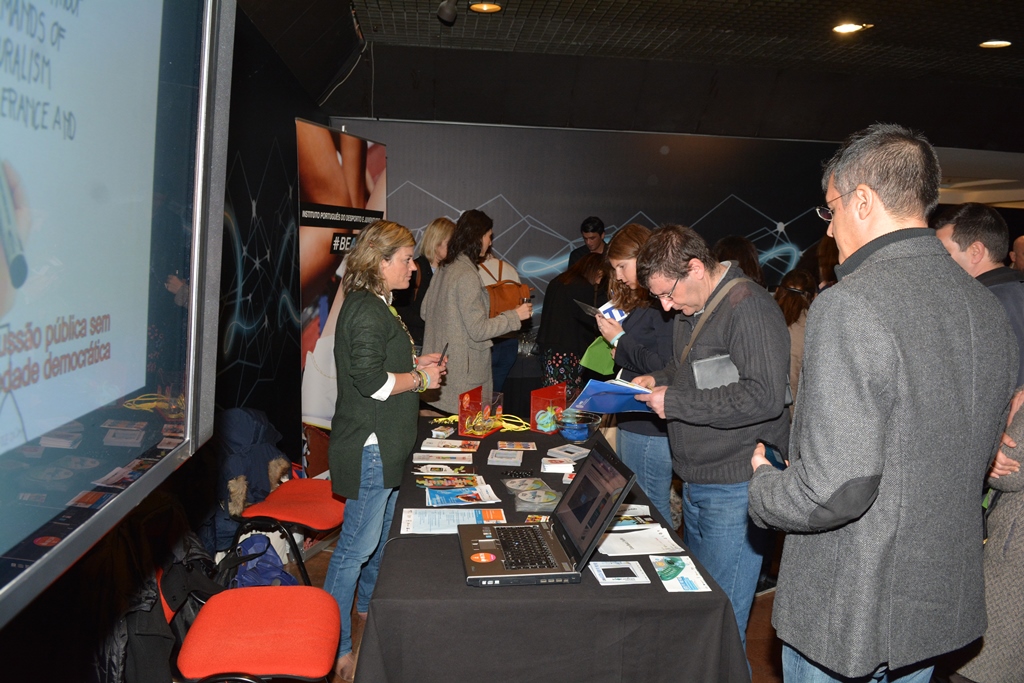
The Internet is a world of opportunities, a place that is worth visiting! This was the main conclusion of the Safer Internet Day Seminar held on February 4 at the Picoas Forum, an event organized by theSafe Internet CenterConsortium in collaboration with the PT Foundation.
The initiative involved academics, psychologists, criminal investigation forces, youth associations, the media, and other experts in a discussion about the challenges that Internet use poses for people's behavior, particularly that of young people.
The seminar opened with a welcome address by Paulo Neves, CEO of Portugal Telecom. The host emphasized the importance of promoting initiatives that encourage responsible use of the Internet, as well as the security and protection of data made available online. Next, José Vítor Pedroso, Director-General of Education, presented the Safe Internet Consortium and its mission to raise awareness in society about the risks of using the Internet. He highlighted the project's areas of intervention as the production of resources, training, awareness-raising, and the promotion of activities."This is work that evolves and adapts to technology,"said the head of Education.

To talk about Digital Identity, Luís Antunes, Professor at the Faculty of Sciences of the University of Porto, presented several scenarios representing the vulnerability to which our personal data is subject and the digital trail generated by sharing information online. He warned of the "importance of controlling our exposure in the digital society, as all the objects around us are constantly sharing information about us, which needs to be controlled, anonymized, and even scrambled." The INESCTEC researcher presented some solutions to combat fraud in authentication systems, which are the focus of his area of research, such as the OFELIA [Open Federated Environments Leveraging Identity and Authorization] program, funded by FCT.
The stage was set for the debate on Privacy and Personal Data Protection with Jorge Duque, PJ Investigator, Magda Cocco, VdA Lawyer, and Luís Antunes, moderated by journalist Fátima Caçador, from Sapo Tek. When asked about the challenges that cyberspace poses to legislative policies, participants pointed to the lack of global consensus on data privacy regulations.
"Europe has an approach [to this issue] that is not culturally accepted in all countries," said Magda Cocco, addingthat"European law allows data to be transferred to other countries as long as the Data Protection Commission authorizes it." Despite the constraints, the lawyer believes that Portugal and Europe have adequate legal instruments to protect the privacy of citizens' and companies' data. Jorge Duque, for his part, believes that the authorities should have more tools and that faster access to information is needed. The inspector also shared information on how the authorities act in cases of identifying suspected pedophiles via the Internet.
Minds and Feelings in the Digital Agewas the theme of a study on online behavior among young Portuguese people, presented by Ivone Patrão, professor and researcher at the University Institute of Psychological, Social, and Life Sciences."Being online is the main activity of many young people,"and the excessive use of technology and access to media and the Internet at an increasingly early age and without parental supervision are causing changes in the behavior and mood of many young people. Not only that, but obesity or extreme thinness are also some of the consequences of this excessive exposure to the Internet. Boys are more "dependent" on online games, while girls prefer social media. These young people spend an average of six hours online per day.
This is the portrait of the Digital Generation at risk and the theme that fueled the next debate moderated by Rute Sousa Vasco, from SAPO: "Impacts of the digital generation: new profiles, new challenges!" Susana Carvalhosa, from ISCTE, Isabel Baptista, from the National Cybersecurity Center, and Paulo de Jesus, from the Division of Intervention in Addictive Behaviors and Dependencies (ARS Alentejo), participated in the discussion of the topic.
Taking a preventive approach, Susana Carvalhosa believes that education on "knowing how to respect others"is essential to prevent abusive and hostile behavior among young people. The researcher explained the scope of the project she is developing at the Center for Research and Social Intervention (IUL), – ParentNets.com – aimed at parents and all those responsible for the education and training of children and young people. The website provides informative material on the Internet, social networks, and technologies.
Isabel Baptista warns that "no one is [completely] safe online"and, therefore, digital citizenship must be promoted in schools and within families. In terms of awareness, the head of the awareness department believes that seniors are the group most exposed to the risks of the Internet and lack critical information.
"Twenty years ago, we talked about drug addiction. To address the problems of that time, the Institute for Drugs and Drug Addiction was created. Today we talk about addiction, and services are being reorganized to meet new challenges,"said Paulo de Jesus in his speech. Today, as 20 years ago, it is believed that pleasure is at the root of addiction and that technology provides satisfaction. The problem arises when the pursuit of pleasure becomes a constant in young people's lives. For the technician and educator,"we cannot demonize technology"and "schools are overwhelmed with recommendations"; we need to take action in the family environment, in the virtual environment, and in all the spaces where young people meet.

The morning ended with recommendations from representatives of the Safe Internet Consortium:
“Parents are less aware of the dangers of online exposure,”Vânia Neto, Microsoft.
“Society is not yet prepared to respond to these challenges!” Jorge Queirós, IPDJ.
“The internet is where the Portuguese of the future spend a lot of time and will spend even more. (...) The internet is a worthwhile place. We need to promote safety and positive use of the internet,” João Carlos Sousa, DGE.
“Strengthening national cooperation to better promote digital inclusion and literacy,”Ana Cristina Neves, FCT.