

CoLAB BIOREF leads project to reduce European dependence on natural gas
-
Topics
Science Funding International Research Technology
-
Share


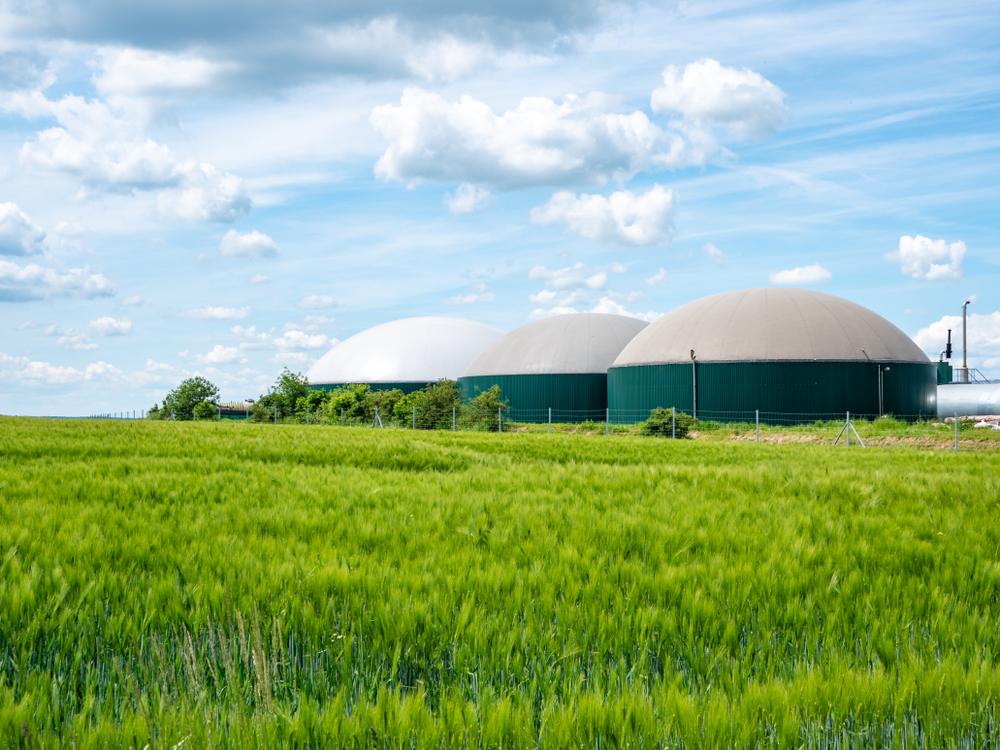
The Collaborative Laboratory for Biorefineries (CoLAB BIOREF) will lead a European consortium, "HyFuelUp – Hybrid biomethane production from integrated biomass conversion," which seeks to develop a technology for producing renewable natural gas from waste, including forestry waste, with the aim of reducing Europe's dependence on natural gas. The project is funded by the Horizon Europe program and represents an investment of €10.2 million.
In addition to CoLAB BIOREF, the consortium includes six public and private entities from Germany, Spain, Greece, the United Kingdom, and Switzerland, and four other Portuguese entities, namely the National Laboratory for Energy and Geology (LNEG), the Polytechnic Institute of Portalegre (IPP), and the companies Dourogás Renovável and Circlemolecule.
This innovative technology will be installed in Tondela, in the district of Viseu, and will enable the production of a gas that is "equivalent in every way to natural gas, but from a renewable source," in the words of Gonçalo Lourinho, coordinator of BIOREF. Francisco Gírio, Chairman of the Board of Directors of CoLAB BIOREF, emphasizes that "the construction of this biorefinery in Portugal will have a strong impact on the development of the renewable gas industry in Europe," responding to the transport and mobility sectors and enabling savings in greenhouse gas emissions.
CoLAB BIOREF was created in 2019, focusing on research and innovation in biorefinery technologies. Like the other Collaborative Laboratories, or CoLABs, it was set up to respond to the need for collaboration between science, technology, and higher education institutions and the economic and social fabric, enabling the direct and indirect creation of skilled and scientific jobs in Portugal through the definition and implementation of research and innovation agendas geared towards creating economic and social value. in the case of BIOREF, the response to these needs stems from the promotion of the bioeconomy and bioenergy as fundamental vectors for decarbonization and the sustainable use of resources.
CoLABs are technological interface centers within the national scientific and technological system supported by the FCT. They must consist of at least one company and one R&D unit from a higher education institution, funded by the FCT. CoLAB status is granted upon application to FCT, with applications being evaluated by an independent panel of experts of recognized international merit appointed by the Foundation's Board of Directors. Once granted, CoLABs are promoted, monitored, and supported by the National Innovation Agency (ANI).
The CoLAB BIOREF press release on this project, which contains further information, is available here.