

Research funded by FCT leads to Gates Studentship
-
Topics
Uncategorized
-
Share


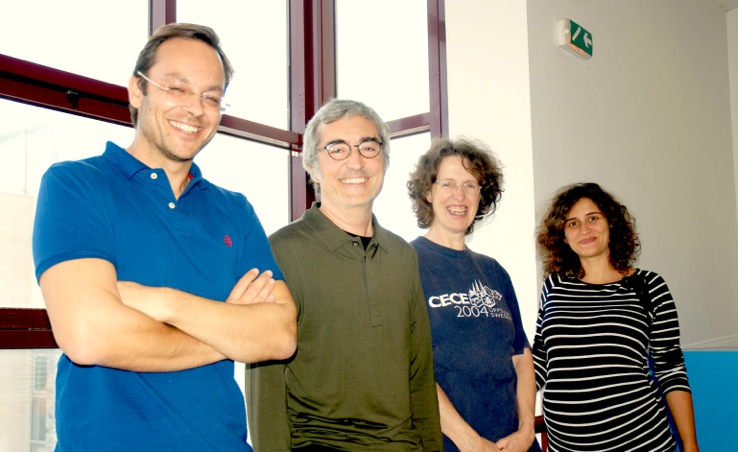
The Institute of Hygiene and Tropical Medicine (IHMT) is one of the winners of Call latest Call Studentships Grand Challenges ExplorationCall, from the Bill & Melinda Gates Foundation. Coordinated by Henrique Silveira, and in collaboration with the Center for Marine Sciences (CCMAR), the teams propose to use the approximately €90,000 in funding to develop an alternative meal to the conventional blood meal for the Anopheles gambiae mosquito, which transmits malaria. The project will make the creation of these mosquitoes in the laboratory, for disease control or research purposes, less dependent on the availability of human or animal blood, and therefore more effective and safer.
The Anopheles mosquito is a vector for malaria transmission, as it carries the parasite that causes the disease, Plasmodium, from one person (or animal) to another. When it bites, the parasite passes into the blood that is sucked from the infected person to the female Anopheles mosquito. In the mosquito, the parasite grows and multiplies, accumulating in the salivary glands. At the next bite, the parasites are injected with the mosquito's saliva into a new host, and a new infection begins.
Female Anopheles mosquitoes need blood meals (obtained through bites) to produce eggs and ensure reproduction. In a project funded by FCT and coordinated by João Cardoso, from CCMAR, researchers identified a peptide (small protein) in human blood that stimulates mosquito reproduction. They now propose to test this factor in an artificial meal, with the aim of producing an effective substitute for blood meals.
The peptide identified by researchers binds to receptors known as G protein-coupled receptors (GPCRs). It is known that in humans (and other vertebrates), peptides and their receptors participate in various physiological processes. João Cardoso has already shown that these receptors are also present in invertebrates, namely in the Anopheles mosquito, and that they are activated by peptides circulating in human blood. One of the effects of their activation is to stimulate mosquito reproduction. The Gates Studentship will allow the teams to study the mechanism underlying this process. If they are successful, they will then be able to apply for further funding from the Gates Foundation—worth $1 million—to move on to the next phase of research. The ultimate goal is to create an artificial meal that will enable researchers anywhere in the world to breed mosquitoes on a large scale in an effective, safe, and ethical manner.
The IHMT at Universidade Nova de Lisboa is part of the Global Health and Tropical Medicine unit. This unit and the CCMARat the University of Algarve are funded by FCT, and both were rated Excellent in the latest FCT assessment.
The Grand Challenges Exploration supports researchers around the world in innovative projects aimed at solving global health and development challenges. The project led by Henrique Silveira is one of more than 50 funded in the 15th edition of this program.
Image: João Cardoso (CCMAR), Henrique Silveira (IHMT), Deborah Power (CCMAR), and Rute Felix (CCMAR).(Credits: CCMAR, University of Algarve)