

Board of Directors
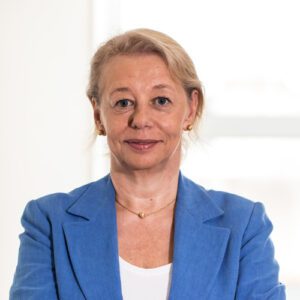
Maria Madalena dos Santos Alves
President
Madalena Alves is a Full Professor of Biological Engineering at the University of Minho. She holds a degree in Chemical Engineering from the University of Porto, a master's degree in Biochemical Engineering from the Instituto Superior Técnico, and a PhD in Chemical and Biological Engineering from the University of Minho. She has been Chair of the FCT Governing Board since July 1, 2022.
She held scientific and academic coordination and management positions at the University of Minho, having directed the Center for Biological Engineering and actively participated in collegiate bodies, namely the School Council and the Scientific Council of the School of Engineering. Between 2007 and 2009, she was director of the installation committee of the UMinho Agency for Energy and the Environment, an institutional initiative.
Her scientific activity focuses mainly on the area of Environmental Biotechnology, with a special focus on biotechnological processes associated with the production and consumption of gases. She has participated as a principal investigator, co-investigator, or team member in multiple research projects funded by national and European programs. She has developed collaborations with international research networks and has been a member of scientific evaluation committees for several international agencies, such as the Helmholtz Association (Germany) and the European Research Council (ERC), of which she has been a panel member since 2021.
He has undertaken several medium- and long-term research stays at internationally renowned institutions, including the J. Craig Venter Institute (USA), the Environmental Change Institute in Galway (Ireland), and Wageningen University (Netherlands).
She founded a spin-off of the University of Minho in the field of Environmental Biotechnology, serving as scientific director between 2007 and 2014. This business initiative became part of an industrial group with international operations, resulting from the valorization of knowledge generated in pioneering R&D projects that she led.
Between January 2021 and March 2022, he was a member of the Board of the International Iberian Nanotechnology Institute (INL), appointed by the Minister of Science, Technology, and Higher Education. He subsequently assumed the Presidency of that Board between July 2022 and December 2023, transitioning to the Vice-Presidency, which he currently holds.
She is a full member of the Academy of Engineering, the Advisory Board of the Viana do Castelo District Delegation of SEDES, and the Advisory Board of COTEC Portugal. She has been honored with several awards and recognitions, including the 2004 Lettinga Award, given by a consortium of Dutch environmental technology companies, and the 2005 BES Innovation Award. In 2009, she was awarded an honorary doctorate by the Technical University of Iași (Romania) and also received honorary distinctions from the Municipal Councils of Viana do Castelo and Braga.
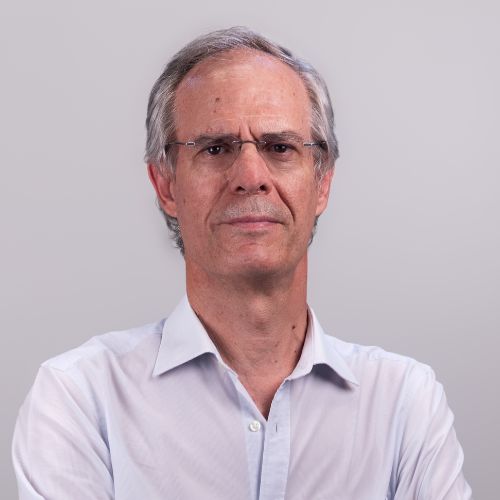
João Nuno Ferreira
Vice President
João Nuno Ferreira graduated in Systems and Computer Engineering in 1991 from the University of Minho. He also holds a master's degree in Distributed Systems, Computer Networks, and Data Communication from University College London, and an MBA from the School of Management at the University of Porto.
Since March 2016, he has been General Coordinator of FCCN, FCT's digital services, a position he will continue to hold. He also serves on the board of directors of Associação DNS.PT as a non-executive member, as well as on the board of directors of Associação CNCA – Centro Nacional de Computação Avançada (National Center for Advanced Computing).
From December 2013 to February 2016, João Nuno Ferreira served as a member of the FCT's governing board, where he was responsible for all activities related to information and communication technologies, digital infrastructures, and Open Science.
From October 1993 to January 2013, he was technical director at FCCN. During this period, he was responsible for various national and international services and projects. He focused on the services and projects of the Science, Technology, and Society Network (RCTS), namely the implementation of fiber optic connections. In addition to this, he monitored the various stages of development of the RCTS as an advanced platform for supporting science and its integration into the European context of academic networks, with particular emphasis on the GÉANT network.
João Nuno Ferreira also taught at Universidade Atlântica between 1997 and 1998, and worked as a senior technician in the IT Department at the University of Minho between 1991 and 1993.
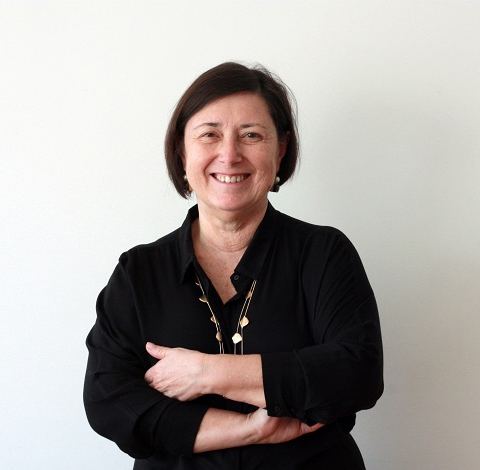
Maria Paula Diogo
Vowel
Professor of History of Technology and Engineering in the Department of Applied Social Sciences at NOVA School of Science and Technology FCT NOVA, where she has been teaching since 1986. She was department chair for four terms and, from 2007 to 2019, (co)directed CIUHCT – Interuniversity Center for the History of Science and Technology, one of Portugal's highest-rated research units and a leader in the history of science and technology.
A pioneer in the field of History of Technology in Portugal, her research focuses on the History of Technology and Engineering in Portugal and its former colonies, and on the processes of globalization of science and technology, particularly with regard to the circulation and appropriation of knowledge, networks, and relations between centers and peripheries. She has recently taken an interest in the relationship between colonial/imperial engineering and the concept of the Anthropocene, leading the project Engineering the Anthropocene: Colonial Science, Technology and Medicine and the change of the African landscape. In this context, he participated in and organized events as part of the international Anthropocene Campus project and, in 2021, organized the Anthropocene Forum, one of the events included in the Portuguese Presidency of the European Council.
She regularly publishes in renowned international journals and is the author, co-author, and co-editor of a large number of books and book chapters, published by leading publishers. She is a founding member of the main international research networks in her field, has organized numerous national and international conferences and workshops, including those of leading societies in the field, and has led and participated in dozens of national and international projects. She was included in the "Women in Science" list in 2021 and received the two highest international distinctions in the field of History of Technology: the Leonardo da Vinci Medal (2020, Society for the History of Technology) and the Kranzberg Lecture (2022, International Committee for the History of Technology), both awarded for the first time to a Portuguese researcher.