

Science 2025 registered 1,780 participants
-
Topics
Events FCT
-
Share


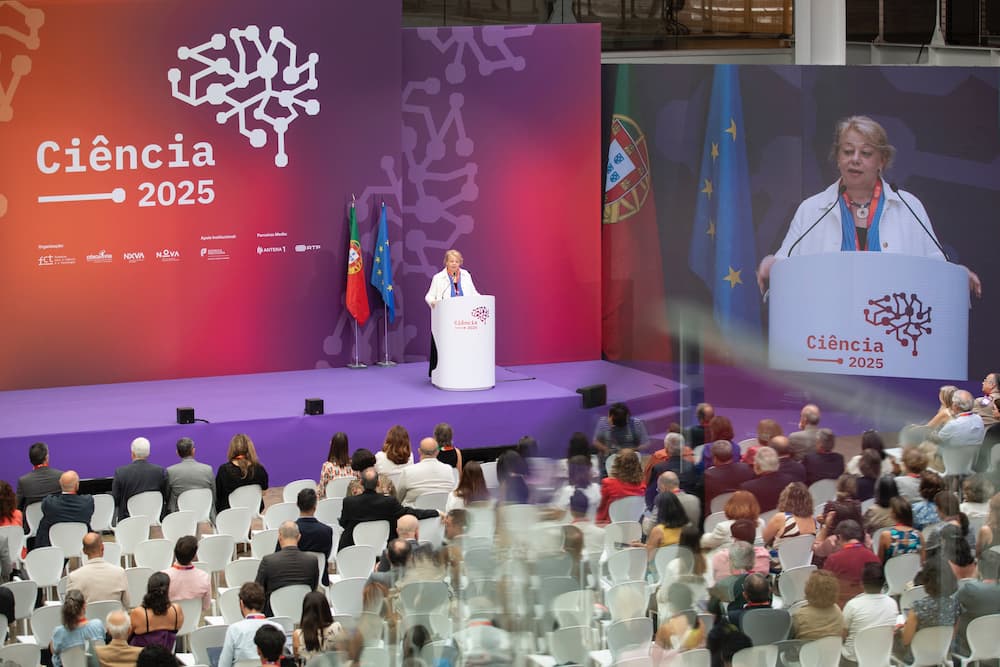
The Science 2025 Meeting, which took place from July 9 to 11 at the Nova SBE campus in Carcavelos, attracted a total of 1,780 participants, confirming its status as the largest science and technology event in Portugal.
With a program consisting of 60 scientific and cross-disciplinary sessions covering science, technology, and innovation, the event featured 288 speakers and 437 authors of scientific posters. The meeting provided a forum for debate on major global challenges and the structuring role of science in sustainable development.
Under the theme "Science, Innovation, and Society," Science 2025 promoted a vibrant space for reflection, sharing, and collaboration between researchers, institutions, companies, and citizens. It consisted of five plenary sessions, which kicked off each day. "Portuguese Scientific Innovation in the International Arena: From Research to Application," "AI4Science and Tools for the Science of the Future," "Biodiversity and Sustainable Development," "The Future of European Competitiveness," "Portugal in the EU's R&I Framework Programs."
The program also featured parallel sessions on major current issues, such as Science Policy, Society and Science, the Digital World, Materials and Biotechnology, and Sustainability, among others. As always, the event sought to inspire new ideas and foster closer collaboration among the scientific community. To this end, it hosted an exhibition area for e-posters by doctoral students and a science and technology exhibition, with the participation of more than 30 exhibitors.
The plenary sessions were recorded and are available for viewing on the Encontro Ciência YouTube channel, where you can also watch a video summary of the event. You can also relive some moments from the meeting in our gallery.
Ciência 2025 was organized by the Foundation for Science and Technology and Agência Ciência Viva, in close collaboration with NOVA University Lisbon and NOVA School of Business & Economics (NOVA SBE), and with institutional support from the Ministry of Education, Science, and Innovation. The European Commission was the guest institution, with the presence of high-level representatives in the field of Science and Innovation.