

Science 2016 brings together Portuguese researchers
-
Topics
Uncategorized
-
Share


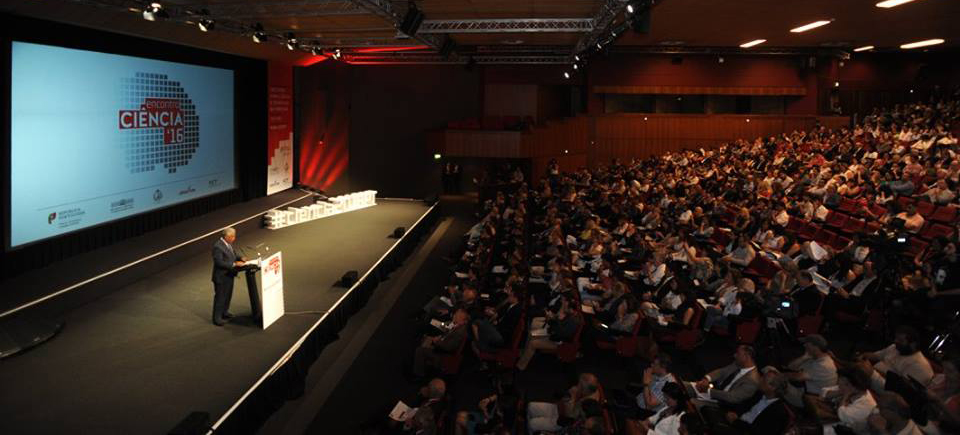
The meeting exceeded all expectations, with almost 4,500 registrations, more than 500 posters by doctoral students, 450 speakers and moderators spread across 100 parallel sessions, and around 50 practical demonstrations of ongoing research projects. The meeting covered various areas of scientific research, from arts and design to engineering, from the depths of the sea to space, from physics to education, including polar science, nanotechnology, and personalized medicine, among many others.
 Seven plenary sessions, with guest speakers and the presence of members of the government and the European Commission, highlighted the areas of Sea and Space, Health, Agriculture, and History. Companies such as Critical Software and the Veniam They spoke of the importance of research for its development, and the Hovione announced a €5 million plan for research projects, open to the scientific community, to solve specific issues in the pharmaceutical industry. Open Science and the initiative More Science, Less Bureaucracy were also under discussion.
 The importance of science was emphasized by various policy makers and representatives of international organizations who visited the Lisbon Congress Center. Interviews conducted throughout the meeting are available at Facebook @scienceencounter and in Twitter with the hashtag #science2016en, and the videos on the website www.ciencia2016.pt .
Science 2016 resumed the tradition of an annual meeting of the national scientific community to present the main topics, results, and issues in various areas of science and technology. The Science series began in 2007 and continued until 2010, becoming a unique moment of gathering and reflection for the Portuguese scientific community. At the end of the meeting, it was announced that it would be held again in 2017.
 The Science 2016 meeting was supported by the Ministry of Science, Technology, and Higher Education. It was promoted by the Foundation for Science and Technology, in collaboration with Ciência Viva – National Agency for Scientific and Technological Culture, the Academy of Sciences, and the Parliamentary Committee on Education and Science.
Image Credits: Science 2016