

L’Oréal Portugal Medals of Honor for Women in Science
-
Topics
Uncategorized
-
Share


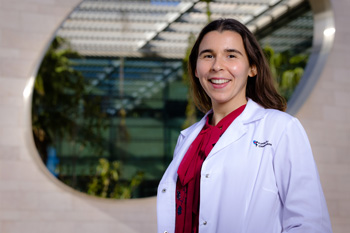
The names of the four young Portuguese researchers awarded in the 17th edition of the L'Oréal Portugal Medals of Honor for Women in Science were revealed today, February 24, at an online awards ceremony. The winners are Joana Carvalho from the Champalimaud Foundation, Margarida Abrantes from the Faculty of Medicine of the University of Coimbra, Inês Fragata from the Center for Ecology, Evolution, and Environmental Changes (cE3c) – Faculty of Sciences of the University of Lisbon, and Liliana Tomé from the Faculty of Sciences and Technology of the New University of Lisbon. The award-winning researchers, who hold PhDs and are aged between 28 and 37, were selected from 97 candidates by a scientific jury chaired by Alexandre Quintanilha. Each of the winners received a cash prize of €15,000.
This initiative stems from a partnership between L'Oréal and UNESCO, established in 1998, called "L'Oréal-UNESCO For Women in Science." In 2004, the L'Oréal Portugal Medals of Honor for Women in Science were created in Portugal, an initiative that brings together L'Oréal Portugal, the National Commission for UNESCO, and the FCT - Foundation for Science and Technology. In 16 years, 57 young researchers have been awarded in Portugal.
Winners of the 17th edition of L'Oréal Portugal Medals of Honor for Women in Science:
Joana Carvalho
28 years old
Researcher at the Champalimaud Foundation
About 20% of the human brain is dedicated to vision, but does this ability to process visual information remain after vision loss? This is one of the questions posed by Joana Carvalho who, with her award-winning project, wants to understand how the adult brain reorganizes itself to respond to situations of vision loss, what factors favor this, and how this restructuring takes place over time. The answers she seeks are essential to understanding how brain plasticity works in these adults who have lost their sight. With a PhD in computational neuroscience from the University of Groningen in the Netherlands, Joana Carvalho is a researcher in the "Preclinical Magnetic Resonance Imaging Group" at the Champalimaud Foundation.

Margarida Abrantes
37 years old
Professor at the Faculty of Medicine, University of Coimbra
Are people with hereditary breast and ovarian cancer syndrome more sensitive to the ionizing radiation they are exposed to during diagnostic tests? Hereditary breast and ovarian cancer syndrome results from a mutation in the BRCA genes. Those who inherit it have a greater history of cancer in their family and an increased likelihood of developing cancer themselves. Once identified, these individuals are subject to regular monitoring, particularly through diagnostic imaging techniques, but these tests involve exposure to ionizing radiation. What Margarida Abrantes aims to understand with this award-winning project is whether people with hereditary breast and ovarian cancer syndrome, and specifically those with a BRCA2 gene mutation, may be more sensitive to the effects of radiation than individuals without this mutation. Margarida Abrantes received her PhD in Health Sciences in 2013 and is currently a professor at the same institution where she studied, the Faculty of Medicine of the University of Coimbra.

Inês Fragata
35 years old
Researcher at cE3c – Center for Ecology, Evolution, and Environmental Changes, Faculty of Sciences, University of Lisbon
What impacts does cadmium in the soil have on the plants that absorb it and on the herbivores that feed on them? In an attempt to answer these and several other questions about the impacts of heavy metals in the soil on agricultural crops and their ecosystems, Inês Fragata will focus on a specific case and study the impacts of cadmium on tomato crops and spider mites, tiny herbivores that feed on hundreds of plant species—including tomatoes and many other important agricultural crops—devastating them. Inês Fragata received her PhD in Evolutionary Biology in 2015 from the Faculty of Sciences of the University of Lisbon and returned to this institution in 2019 as a researcher at cE3c, after three years at the Gulbenkian Institute of Science.

Liliana Tomé
35 years old
Researcher at LAQV-REQUIMTE – Associate Laboratory Green Chemistry, Faculty of Science and Technology, New University of Lisbon
How can we more effectively isolate and capture CO2 released from power plants, preventing it from escaping into the atmosphere? The increase in greenhouse gas emissions and the impacts they cause—from rising temperatures and extreme weather events to rising sea levels and ocean acidification—make it urgent to reduce emissions and find more efficient ways to capture the gases we emit, particularly carbon dioxide (CO2). Liliana Tomé received her PhD in Engineering and Technology Sciences from the António Xavier Institute of Chemical and Biological Technology (ITQB NOVA) in 2014 and remained at this institute as a researcher. In 2018, after being awarded an Studentship Marie Curie Studentship , she moved to POLYMAT at the University of the Basque Country, and in 2020 she returned to Universidade Nova.