

Portugal increases its contribution to ESA to stimulate scientific and technological development
-
Topics
Uncategorized
-
Share


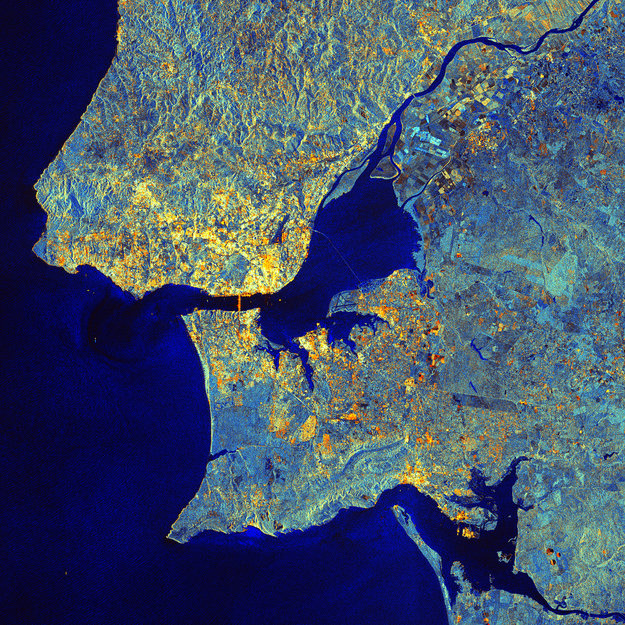
The Minister of Science, Technology, and Higher Education (MCTES) and the President of the Foundation for Science and Technology (FCT) participated in the meeting of the Ministerial Council of the European Space Agency (ESA), which took place on December 1 and 2 in Switzerland.
At the meeting that brought together ministers from member countries with scientific, technological, or industrial responsibilities, Portugal proposed increasing its participation in the ESA by €30.5 million over the next six years, representing a 43% increase over the amount currently committed for the 2017-2022 period. The FCT will be responsible for around 25% of this investment, with the remainder allocated to contributions from the Ministries of Economy, Planning, and Infrastructure. Portugal thus proposes to strengthen its position in the ESA to encourage the participation of companies and institutions in space programs and its strategic positioning in the Atlantic. In this context, the creation and installation of the Atlantic International Research Center (Air Center) in the Azores is being studied.
Portugal has been a member of ESA since 2000, with FCT coordinating the activities of the Portuguese Delegation and the participation of national companies and R&D institutes in ESA space programs, including those implemented under the ESA-European Union Framework Agreement. Membership was essential to stimulate the participation of national researchers and institutions in programs of high scientific and technological intensity and relevance. Portugal contributes around 0.5% of the budgetary effort of the 22 ESA Member States, which over the last fifteen years has contributed to solid collaboration between industry and the national scientific community in the development and use of space applications with enormous impact in areas such as scientific instrumentation and sensors for planetary missions, advanced software for satellite navigation and control, new materials and composites (based on cork) for satellite and launcher structures, management and operation of technological infrastructures for simulating the re-entry of satellites into the Earth's atmosphere and tracking the trajectory of large launchers, among others.
Portuguese space skills and applications have been successfully transferred to other sectors with high impact and economic value, such as aeronautics, automotive, naval, rail, energy, earth observation, agriculture, security and civil protection, communications, and augmented reality. Between companies and academia, around 110 Portuguese entities supply or have been involved in projects with the ESA, representing a direct return for the country of around €155 million — translating into an industrial return of over 100% in 2015, taking into account the national contribution to the organization.
The space ecosystem in Portugal is supported by highly qualified human resources. For those who want to start a career in these areas, applications are currently open for Technology Internships at ESA, ESO, and CERN for those who have completed their bachelor's degree less than 6 years ago or their PhD less than 4 years ago. FCT supports 18 Studentships area. Learn more here.
Image credits:http://www.esa.int/por/ESA_in_your_country/Portugal/Lisboa