

Open Science Policies - Open Access Policy
Scientific Articles – Transformative Pathway
-
A hybrid journal is a journal that simultaneously offers articles in open access and articles that are only accessible upon payment of a subscription fee.
-
No. Open access journals and platforms, as well as hybrid journals, must comply with the technical requirements specified in the annex to the FCT Open Access Policy.
-
In open access journals, all articles are published in open access, while in hybrid journals only some of the articles are published in open access, with the rest being published in closed access.
By consulting the Journal Checker Tool, it is possible to identify the type of journal in question through the results obtained following the consultation made to clarify the avenues available for compliance with the Open Access Policy offered by the journal in which you wish to publish.
The following indicates which type of search result corresponds to which type of journal.
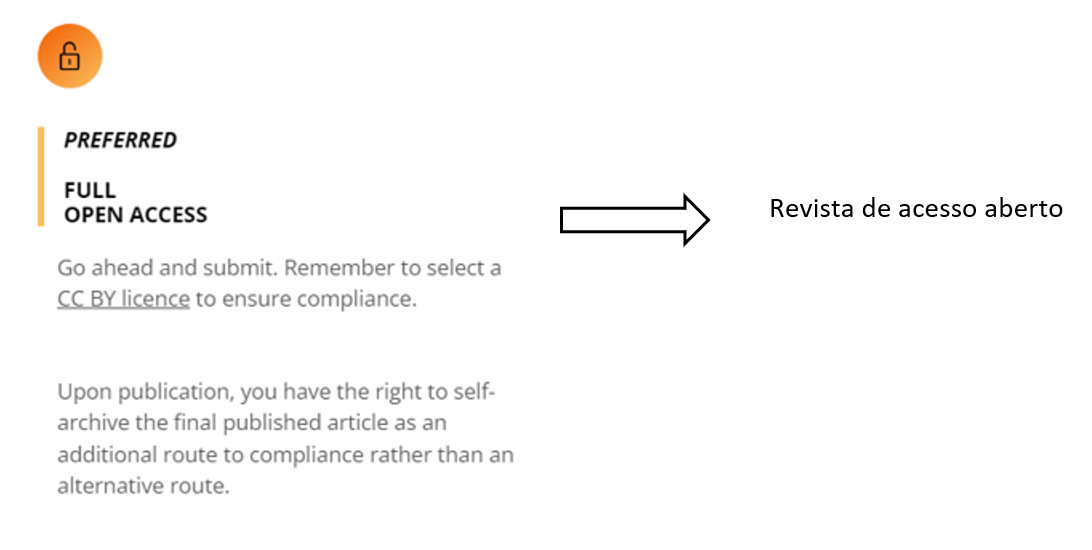
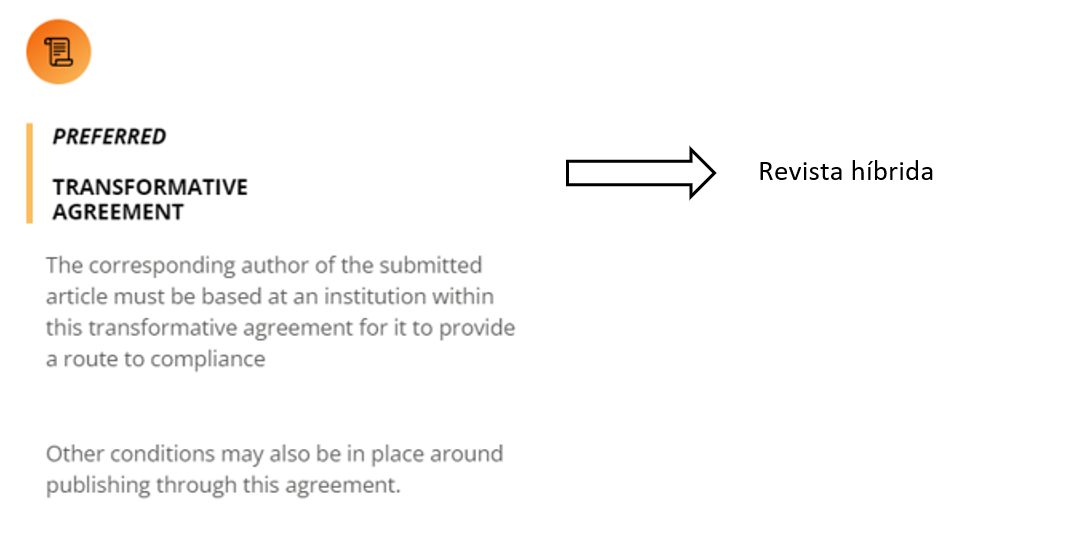
-
A transformative agreement is an agreement that provides for the payment of a fee to the publisher that covers the publication of open access articles. The agreement is called transformative because it "transforms" the money that was traditionally paid to subscribe to content, i.e., the money paid to read, into money paid to support the publication of open access articles.
As part of the b-on (Online Knowledge Library) initiative, FCT has signed transformative agreements with a group of publishers that benefit authors affiliated with b-on member institutions.
Information on the transformative agreements signed by FCT within the framework of b-on can be found here Open Access (b-on.pt)
The list of b-on member institutions can be found here Members (b-on.pt)
-
APC expenses in hybrid journals outside of transformative agreements are not considered eligible expenses in FCT funding instruments, in order to avoid what is known as double dipping, i.e., a double source of revenue for publishers, on the one hand from charging APCs for placing articles in open access and, on the other hand, from charging a subscription price for hybrid journals where these articles are published.
It is therefore strongly discouraged for authors to pay APCs as a way of ensuring open access publication of their articles in hybrid journals. In such cases, it is advisable for the publication to be closed access and for the author to ensure compliance with the FCT's open access policy by depositing their article in an RCAAP repository, following the retention of rights to their article.
-
Lists of hybrid journals by publisher where it is possible to publish in open access under transformative agreements signed with publishers present on b-on can be found on the b-on website, via the open access page: Open Access (b-on.pt).
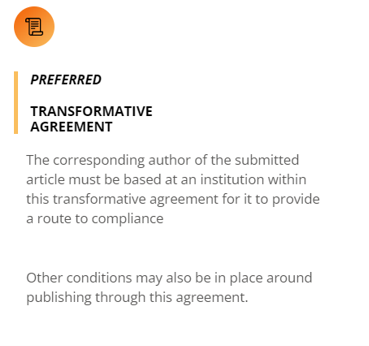
Consulting the Journal Checker Tool will also reveal whether the journal is covered by a transformative agreement with b-on, in which case the result will be as follows:
-
Once the open access publication quota under a transformative agreement has been exhausted, the article will be published in closed access in that journal, and the author must ensure compliance with the FCT Open Access Policy by using the green route.
-
No. Depositing in a repository ensures the long-term preservation of the article, particularly in the event that the journal or publisher where it was published disappears. For this reason, even articles whose open access is guaranteed by other means should be deposited in an RCAAP network repository.
-
No. The transformative agreement does not imply any delay in the times normally associated with the publication of an article, as these agreements have no impact on the procedures followed for publication or on the deadlines associated with them. These will be exactly the same as those applied to publication outside the framework of a transformative agreement.
-
No. The Author’s Accepted Manuscript ( AAM) version of articles published in closed access must be deposited in an RCAAP network repository, without being subject to any embargo period, following the retention of rights (RRS) by the author.
One of the objectives of the Open Access Policy is to make articles funded by the FCT immediately available, i.e., without any embargo period. In the case of articles published in closed access, this is achieved by making them available in open access through their deposit in a repository, which is possible following the retention of rights mentioned above.